Ledger Login — Secure Access to Your Ledger Wallet
A clear, vertical guide that explains how to connect your Ledger hardware device to Ledger Live, authenticate safely, and protect your private keys while using features like staking, swapping, and account management.
What is Ledger Login?
Ledger Login describes the local authentication flow used to access your Ledger hardware wallet via the Ledger Live application (desktop or mobile). Unlike a typical web login with a username and password, Ledger Login relies on three elements: your physical Ledger device, the PIN you set on it, and your 24-word recovery phrase kept offline. The critical difference is that private keys never leave the hardware device — all signing and verification happen on the device itself.
How the login process works
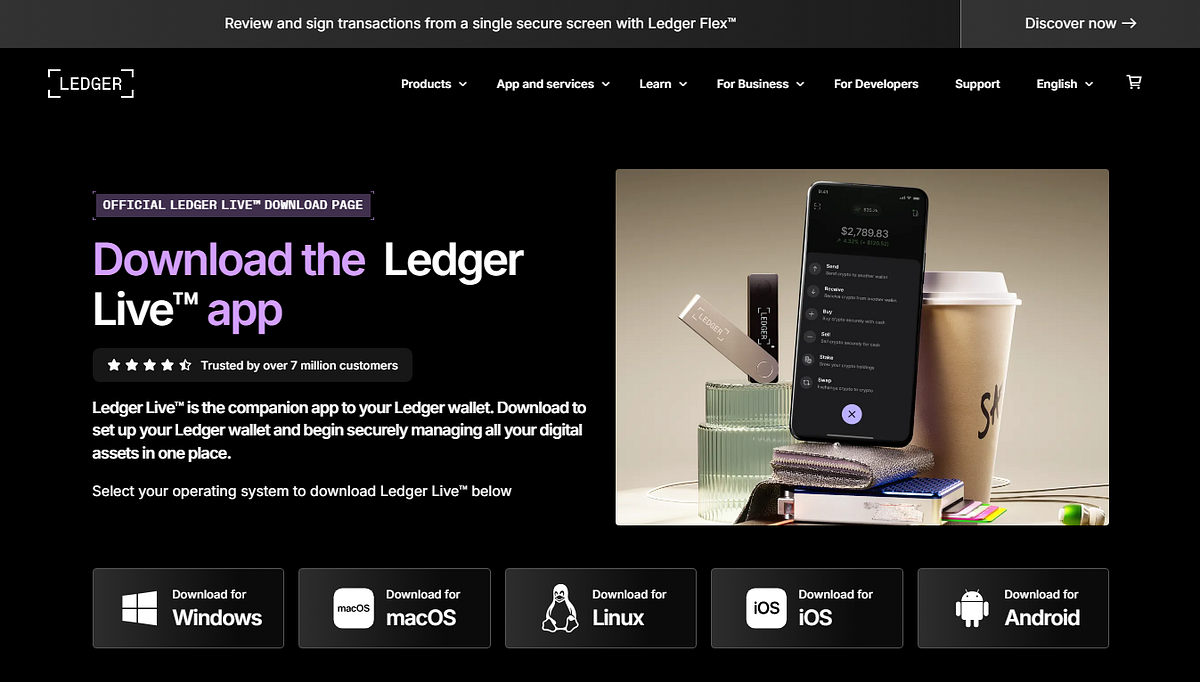
To begin, download Ledger Live from Ledger’s official site and open the app. Connect your Ledger device via USB or pair it over Bluetooth if your model supports it. Power on the device and enter your PIN directly on the hardware; never type your PIN into a website or computer. Ledger Live will detect the device and load public account data. When you request a transaction, Ledger Live prepares the unsigned transaction and sends it to the device for final verification and signing — you review details on the device screen and confirm physically before the signature is produced.
Step-by-step: logging in safely
- Install Ledger Live from the official Ledger.com resource and update to the latest version.
- Connect your Ledger device to your computer or phone using the official cable or Bluetooth pairing process.
- Unlock the device by entering your PIN directly on its buttons or touchscreen.
- Allow the application to communicate with the device when prompted; open the specific coin app on the device if required (e.g., Bitcoin, Ethereum).
- After the device is recognized, your accounts and balances will appear in Ledger Live. Any outgoing action requires on-device confirmation.
Security best practices
- Never share your recovery phrase: Ledger and support will never ask for it. Keep it offline and consider a metal backup for durability.
- Enter PIN only on the device: Shield the input from onlookers and never type the PIN into any web page.
- Verify transaction details on-device: Confirm recipient address and amount on the Ledger screen — it is the final source of truth.
- Keep firmware and Ledger Live updated: Updates include important security patches and compatibility improvements.
Troubleshooting common login issues
If Ledger Live does not detect your device, first check the cable and USB port and try a different one. Make sure the device is powered on and unlocked, and open the relevant app on the device if needed. Restart Ledger Live and the device; for Bluetooth pairing issues on mobile, toggle Bluetooth and re-pair. If firmware updates are required, follow the Manager instructions in Ledger Live and confirm updates on your device.
What if you’re locked out?
If you forget your PIN and the device wipes after multiple incorrect attempts, you can restore your accounts using your 24-word recovery phrase on a new Ledger or any compatible wallet. That’s why storing the recovery phrase securely and offline is essential. If you suspect the seed phrase was exposed, move funds to a fresh wallet immediately and set up a new recovery phrase.